


Gas vs. Diesel Isuzu Trucks: Which Powertrain Is Right for Your Business?
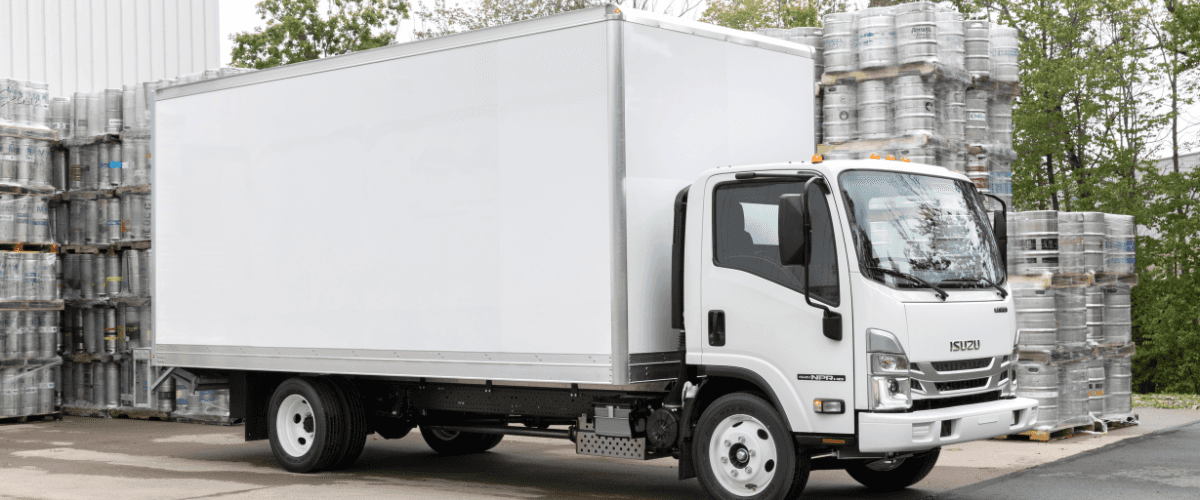
For many businesses, the choice between gas and diesel powertrains is more than preference — it’s a decision that affects purchase price, operating cost, uptime, and how effectively a truck performs day-to-day. Isuzu’s N-Series (NPR, NPR-HD, NRR) lineup offers both gasoline and diesel options, and each has clear strengths depending on how you use the truck.
This guide breaks down the most important differences — purchase price, fuel economy, maintenance, payload and towing capability, resale, and real-world use cases — so you can decide which Isuzu powertrain best fits your operation.
Quick overview: what Isuzu offers
Isuzu’s N-Series trucks cover Class 3–5 applications and are offered with either gasoline or diesel engines depending on model and market. For example, the NPR-HD (GVWR 14,500 lb) is available with a gasoline 6.6L GM-built V8 or Isuzu’s 5.2L turbocharged diesel in many configurations; payload allowances commonly fall in the ~8,200–8,900 lb range depending on body and axle selection. These published GVWR and payload ranges are reflected in Isuzu spec sheets for the N-Series.
1) Purchase price: diesel usually costs more up front
One of the most consistent findings across dealers and fleet experts is that diesel-powered Isuzu trucks typically carry a higher sticker price than comparable gas models. The difference is generally in the $4,000–$6,000 range, largely due to the diesel engine hardware and emissions aftertreatment systems (DEF, SCR) required on modern diesels. If your budget is tight up front, a gas NPR or NPR-HD can lower the initial outlay.
2) Fuel economy and fuel cost: diesel can win on fuel per-mile at higher mileage
Diesel engines are more thermally efficient and typically return better miles-per-gallon (mpg) when compared to gas engines of similar output — especially on sustained highway or heavy-load duty cycles. Isuzu tools and spec guidance show diesel-class trucks delivering stronger fuel economy in many medium-duty applications, and their fuel-comparison planning tools let fleets estimate years-to-payoff based on mileage and local fuel prices. For urban delivery routes with lots of idling and low-speed operation, the gap can shrink, but for highway-intensive fleets diesel usually reduces fuel cost per mile.
Example (industry averages): a medium-duty diesel LCF might average in the low-to-mid teens mpg on mixed routes (10–16 mpg depending on spec), while comparable gas models commonly report lower mpg under identical loads. Real-world results depend heavily on body weight, gearing, route profile, and driver behavior.
3) Maintenance and repair: diesel tends to cost more, but intervals and longevity are factors
Diesel engines have historically been more expensive to maintain when repairs are needed — replacement parts, DEF systems, turbochargers, and specialized filters add cost. However, diesels are also built for higher torque and longevity under heavy loads. For fleets that run high annual mileage and heavy loads, the relative durability of diesel can offset higher maintenance bills through longer engine life and fewer replacements over many years. Conversely, gas engines can be cheaper to service and quicker to repair at general repair shops, which matters if you’re operating in an area without quick access to diesel specialists.
Practical tip: factor in expected annual miles, the availability of qualified technicians in your area, and the cost of downtime when comparing maintenance scenarios.
4) Payload, towing, and real-world capability
Payload ratings for Isuzu N-Series chassis are primarily driven by GVWR, axle selection, and body choice rather than strictly by gas vs diesel. In many NPR-HD configurations the payload range can be approximately 8,200–8,900 lb, with slight variation between gas and diesel builds depending on axle ratios and equipment. That means both gas and diesel NPR-HD trucks can handle the heavy box-body or service-body loads common in moving, landscaping, and delivery businesses — but you should confirm payload on the actual spec sheet for the VIN you plan to buy.
If you plan to tow frequently, diesels typically produce stronger low-end torque which helps when pulling heavy trailers. For strict payload-only jobs (carry-heavy loads in the bed/box), either engine can be configured to meet needs — the key is matching axle ratios, brakes, and body weight in the spec process.
5) Resale value and total cost of ownership (TCO)
When you model total cost of ownership — purchase price, fuel, maintenance, downtime, and resale — diesel often comes out ahead when annual mileage is high (many fleet calculators show diesel payoff after a certain mileage threshold). For lower-mileage or city-only operations, gas trucks often have better economics up front.
Isuzu’s own fuel-comparison tools and independent dealer data let buyers input mileage and local fuel prices to estimate years-to-payoff between gas and diesel — a recommended step for any buyer evaluating long-term ownership costs.
6) Emissions, regulations, and operational considerations
Modern diesel engines include exhaust aftertreatment systems (DEF, SCR) that reduce NOx and particulates but add complexity. In some urban zones and fleets, emissions rules or idling restrictions can influence engine choice. If your vehicles operate in regions with stringent emissions requirements, confirm compliance and any added maintenance or operational procedures related to DEF and regeneration cycles. Gas engines avoid DEF systems entirely, which some operators find operationally simpler.
7) Upfits, body types, and mission-fit
Isuzu’s chassis are popular for a wide variety of upfits — dry vans, refrigerated bodies, box trucks, flatbeds, and service bodies. Because upfit weight contributes heavily to payload calculation, the best practice is to spec the chassis and engine with a target body and weight in mind. For example, a moving company needing maximum cargo weight will focus on maximizing payload and may prefer a gas NPR-HD with lighter ancillary equipment — or choose diesel if routes are long and heavy towing is frequent. Jerry Seiner Isuzu’s commercial specialists can help map body weights, wheelbases, and axle choices to your intended application to ensure you don’t lose critical payload capacity after the body is installed.
8) Which powertrain is right for common business cases?
-
Local delivery, many stops, city driving (low miles, frequent idling): Gas often wins — lower purchase price, simpler maintenance, and fewer idle-related diesel regeneration issues.
-
Regional hauling, highway miles, heavy towing: Diesel often wins — better fuel economy under load, stronger low-end torque, and longer life in severe duty.
-
Mixed use with seasonal peaks (moving companies, landscaping): Model your annual mileage. If seasonal peaks produce many highway miles, diesel may pay off; if mileage stays moderate, gas may be the smarter short-term buy.
-
Fleet simplicity and service network concerns: If you lack immediate access to diesel specialists, gas is easier to service locally — important for small businesses without dedicated fleet maintenance.
9) Practical next steps to decide
-
Gather your route profile: average miles per day, percentage highway vs. city, typical loads.
-
Estimate annual fuel spend: use Isuzu’s fuel comparison tools or our team’s calculator to see years-to-payoff.
-
Confirm payload after upfit: pick the body type and have us calculate the in-service payload so you know exact capacity.
-
Evaluate service and parts access: confirm local diesel technician availability and turnaround times for major repairs.
-
Run TCO scenarios: include purchase price delta, estimated fuel, maintenance, and expected resale value.
Final Thoughts from Jerry Seiner Isuzu
There is no single “right” answer — gas and diesel Isuzu trucks both have compelling advantages. For lower-mileage, city-first fleets, gas Isuzu NPR and NPR-HD chassis usually make the most sense because of lower upfront cost and simpler maintenance. For high-mileage, heavy-haul, or mostly highway operations, diesel often delivers better fuel economy, torque, and lifecycle value despite higher acquisition and repair costs.
If you’d like help modeling real numbers for your business — including payload after upfit, estimated fuel cost, and projected TCO — contact the commercial truck team at Jerry Seiner Isuzu. We’ll run your route data through our Isuzu calculators, walk you through chassis and body options, and help you choose the powertrain that minimizes operating cost while maximizing uptime.
Visit us at Jerry Seiner Isuzu or call our commercial sales team to schedule a consultation and test drive. We’re here to make sure your next truck is an asset to your business from day one.
0 comment(s) so far on Gas vs. Diesel Isuzu Trucks: Which Powertrain Is Right for Your Business?