


Cab-Over vs Conventional Truck: Isuzu Urban Delivery
When selecting commercial vehicles for last-mile logistics, trade services, or regional freight, choosing the right cab configuration impacts your daily operating efficiency. For business owners, fleet managers, and commercial drivers navigating tight city streets, the debate between a cab-over vs conventional truck comes down to maneuverability, visibility, and total cost of ownership.
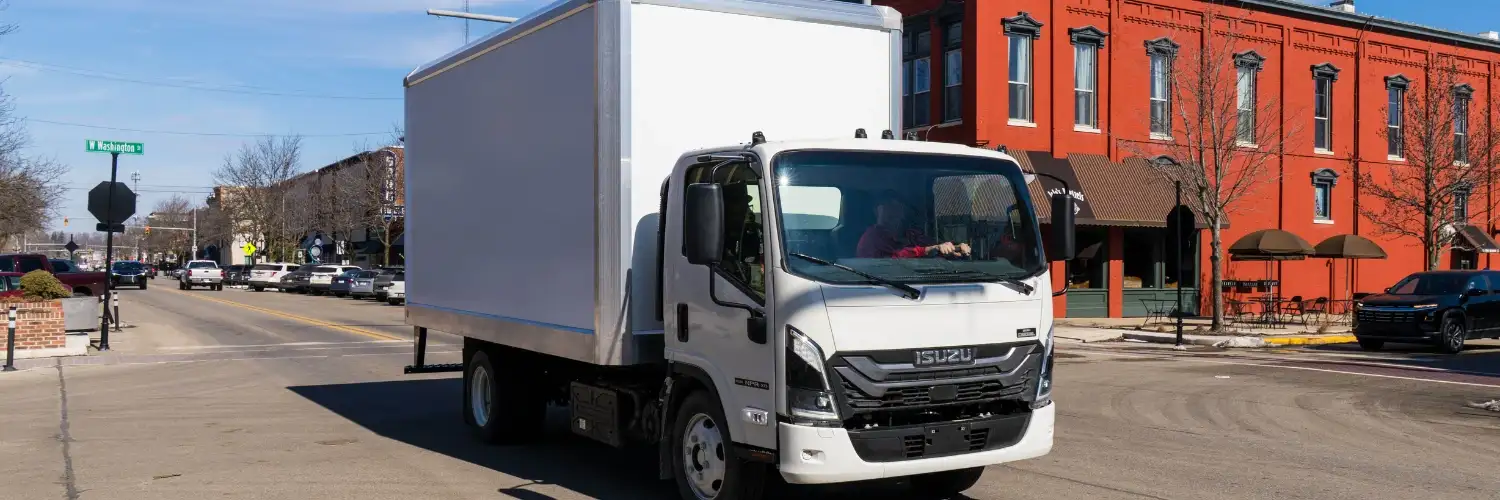
Conventional trucks position the engine in front of the cab, creating a long hood. While popular for long-distance highway hauling, conventional models present severe drawbacks in crowded metro areas. In contrast, an Isuzu cab-over truck (also known as a Low Cab Forward or LCF design) mounts the cabin directly above the engine and front axle.
In this article, we examine why the Isuzu work truck is the ultimate urban delivery truck, comparing architectural advantages, payload capabilities, and real-world fleet ROI—and why local businesses trust Seiner Isuzu Salt Lake for their commercial vehicle solutions.
Cab-Over vs Conventional Truck Design Breakdown
| Feature / Metric | Conventional Truck | Isuzu Cab-Over (LCF) | Operational Advantage |
|---|---|---|---|
| Engine Placement | In front of cabin (under long hood) | Directly underneath cabin floor | Zero-hood design maximizes chassis length for body box |
| Forward Visibility | Blind spot extends ~20 ft in front | Ground visible within 8 ft | Superior pedestrian safety & tighter curb parking |
| Maneuverability | ~35° to 40° wheel cut angle | Up to 49.5° wheel cut angle | Up to 20% tighter turning radius in tight alleyways |
| Cargo Space Efficiency | Restricted by front engine nose | +2 feet extra body length | More cargo capacity on the exact same overall vehicle length |
| Engine Access | Front-tilting hood | 45° Tilt-Cab Mechanism | Full ground-level 360° access speeds up shop service |
Engine Placement and Space Utilization
The core distinction between a cab-over and conventional truck lies in engine placement. Conventional trucks place the powertrain in front of the windshield. This design extends overall vehicle length by 6 to 8 feet without adding a single inch of usable cargo space.
An Isuzu cab-over truck eliminates the front hood entirely. By positioning the cabin over the engine, the vehicle maximizes usable chassis space, allowing fleet managers to fit larger cargo boxes or specialized utility bodies on a significantly shorter overall wheelbase.
Turning Radius and Urban Maneuverability
In tight alleyways, congested loading docks, and downtown gridlock, maneuverability is critical. Conventional trucks require wide sweeping turns due to their extended wheelbases and long front snouts. Isuzu Low Cab Forward trucks feature up to a 49.5-degree wheel cut. This provides a tight turning radius work truck that can easily turn around in tight residential cul-de-sacs and crowded urban corridors.
Why Isuzu Low Cab Forward Architecture Dominates Urban Delivery
Unrivaled Sightlines and Driver Safety
Operating a heavy urban delivery truck in dense traffic demands clear visibility. Drivers in a conventional truck must look over a long hood, creating a forward ground blind spot that can extend up to 20 feet in front of the bumper.
Navigating High-Density Pedestrian and Traffic Zones
Isuzu cab-over design positions the driver directly above the front axle with an expansive windshield. This commercial truck driver visibility allows operators to see the ground as close as 8 feet in front of the vehicle. This eliminates hazardous blind spots around pedestrians, cyclists, and low-lying obstacles.
Maximizing Cargo Space on a Shorter Wheelbase
For urban delivery fleet management, body length optimization directly boosts profitability. An Isuzu LCF chassis typically offers 2 additional feet of body space compared to a conventional truck of equal overall length.
| Feature / Metric | Conventional Commercial Truck | Isuzu Cab-Over (LCF) Truck | Operational Advantage |
|---|---|---|---|
| Forward Ground Visibility | Blind spot extends ~20 feet | Ground visible within 8 feet | Superior pedestrian safety & tighter parking |
| Wheel Cut Angle | ~35° to 40° | Up to 49.5° | Up to 20% tighter turning radius |
| Usable Body Length | Restricted by front engine hood | +2 feet extra body length | Greater cargo volume per trip |
| Engine Access | Front tilting hood | 45° Tilt-Cab Mechanism | Rapid maintenance access in shop |
Unique Industry Insight: Fleet data shows that in last-mile routes, switching from conventional to Isuzu LCF trucks reduces missed delivery windows by up to 18% purely due to faster maneuvering and easier parallel parking in urban loading zones.
Isuzu Work Truck Lineup & Model Specifications
Isuzu builds a comprehensive range of medium-duty commercial trucks engineered for diverse applications, from landscaping and plumbing to refrigerated food delivery.
Isuzu N-Series (Class 3–5) for Agile City Routes
The Isuzu N-Series gas and diesel models are the benchmark for light-to-medium urban hauling. Available with either a 6.6L V8 gas engine or the legendary 5.2L 4HK1-TC turbo-diesel engine, these trucks deliver unmatched stop-and-go city delivery performance.
Isuzu F-Series (Class 6–7) for Heavier Regional Hauling
When payload requirements exceed Class 5 capacity, the Isuzu F-Series (such as the FTR and FVR) offers Class 6 and 7 capability paired with Cummins B6.7 or Isuzu diesel engines and Allison transmissions.
| Model Line | Class / GVWR Range | Engine Options | Primary Cargo Body Upfit Options |
|---|---|---|---|
| Isuzu NPR / NPR-HD | Class 3–4 (12,000–14,500 lbs.) | 6.6L Gas V8 / 5.2L Turbo-Diesel | Dry Van, Landscaping, Service Body |
| Isuzu NQR / NRR | Class 4–5 (17,950–19,500 lbs.) | 5.2L 4-Cyl Turbo-Diesel | Refrigerated Box, Flatbed, Dump Body |
| Isuzu F-Series (FTR/FVR) | Class 6–7 (25,999–33,000 lbs.) | Cummins B6.7 Diesel / Allison Auto | Heavy Beverage, Freight, Municipal |
Total Cost of Ownership & Fleet ROI
Maintenance Efficiency with Isuzu Tilt-Cab Design
For business owners, vehicle downtime equals lost revenue. Conventional engine bays force mechanics to lean over fenders to service components. The Isuzu work truck features a quick-release 45-degree tilt-cab maintenance system.
Unlatching the cabin tilts the entire cab forward, exposing the engine, transmission, and fluid reservoirs for ground-level access. This design speeds up routine oil changes, filter replacements, and belt inspections, keeping your fleet on the road longer. Combined with high fuel economy and strong resale values, Isuzu consistently delivers a low medium-duty truck total cost of ownership.
Partnering with Seiner Isuzu Salt Lake
Utah’s Commercial Fleet Sales, Service, and Upfitting
Selecting the right commercial truck requires a local dealership partner that understands your business demands. Seiner Isuzu Salt Lake provides fleet managers across Utah with specialized vehicle inventory, custom upfit solutions, and factory-trained service technicians.
Whether you need an NPR box truck for Wasatch Front deliveries or a heavy-duty F-Series chassis for regional freight, Seiner Isuzu Salt Lake delivers tailored commercial leasing, fleet management support, and genuine Isuzu parts.
Conclusion: Elevate Your Commercial Fleet Today
When comparing a cab-over vs conventional truck for city distribution, trade vocational work, and last-mile logistics, the verdict is clear. Conventional trucks serve a purpose on open interstate highways, but the Isuzu cab-over truck reigns supreme in urban environments.
With its class-leading turning radius, exceptional driver visibility, extra usable cargo space, and quick maintenance access, an Isuzu work truck optimizes every delivery route while lowering long-term operating costs. Equipping your business with Isuzu Low Cab Forward technology means fewer missed turns, safer driving conditions, and maximum payload efficiency.
Ready to upgrade your fleet efficiency in Salt Lake City and across Utah? Visit the commercial truck specialists at Seiner Isuzu Salt Lake today. Explore our extensive inventory of new Isuzu N-Series and F-Series trucks, schedule a test drive, and discover how our custom upfitting solutions can streamline your business operations.
Frequently Asked Questions (FAQs)
Why are cab-over trucks better for urban delivery than conventional trucks?
Cab-over trucks feature a significantly shorter wheelbase and a tighter turning radius than conventional trucks. This allows drivers to easily navigate crowded city streets, narrow alleys, and tight loading zones while carrying the same or greater cargo volume.
How does an Isuzu cab-over truck improve driver visibility?
Because the driver sits directly over the front wheels without a long engine hood, forward ground visibility is dramatically increased. Drivers can see objects as close as 8 feet in front of the vehicle, reducing blind spots and enhancing safety in high-pedestrian urban areas.
Does an Isuzu work truck offer better cargo space than a conventional truck of the same overall length?
Yes. Because the engine is housed underneath the cab rather than in front of it, an Isuzu Low Cab Forward truck typically yields up to 2 additional feet of body length on the same bumper-to-bumper footprint.
How does the tilt-cab feature on an Isuzu cab-over truck reduce maintenance downtime?
The entire cabin tilts forward 45 degrees, providing mechanics with complete 360-degree ground-level access to the engine compartment. This speeds up routine maintenance and repairs, drastically reducing shop labor time and fleet downtime.
Where can I buy or lease an Isuzu work truck in Utah?
You can explore, test drive, and purchase or lease the full lineup of Isuzu N-Series and F-Series commercial trucks at Seiner Isuzu Salt Lake, Utah’s premier commercial vehicle dealership offering custom upfitting and dedicated fleet service.
0 comment(s) so far on Cab-Over vs Conventional Truck: Isuzu Urban Delivery